Slop At the NVIDIA Computex Keynote Speech 2026
slop (AI slop) is a word for piles of generated tokens that look like work but contain noise rather than meaningful content. The shocking part of the NVIDIA Computex 2026 keynote is that it served some slop too.
First things first, there were interesting parts of the talk - such as how AI will serve humanity and how we could all benefit from it. There were interesting chip and system developments by NVIDIA.
But the longer the speech ran, the more it drifted in another direction for me:
🤖 Aside from the impressiveness of the 88-core Vera CPU, it is the label on it: According to NVIDIA’s chairman, the new CPU is built for agents, not humans anymore. Human CPUs were yesterday. Next was the introduction of “a new computing pattern” with agents.
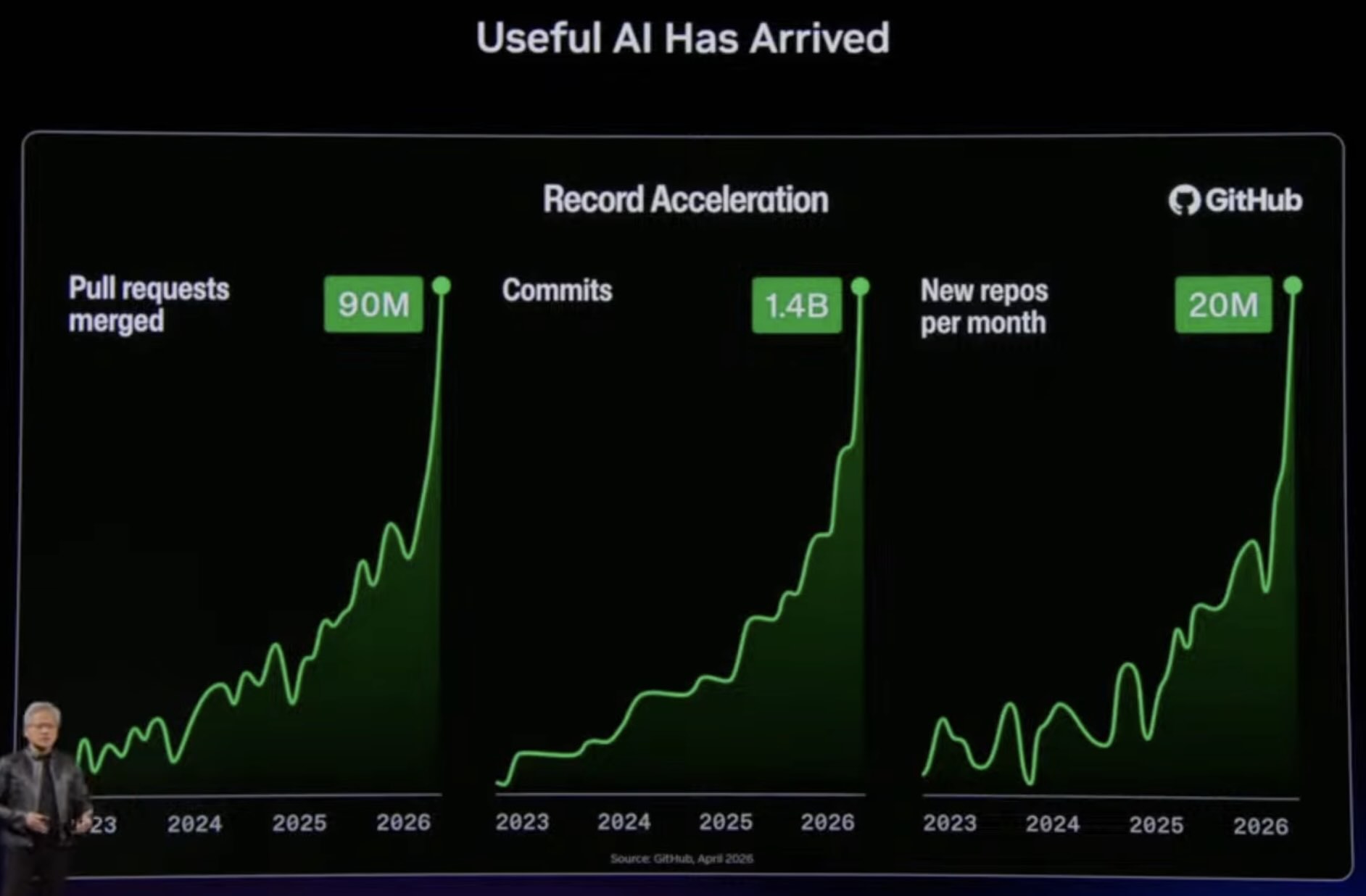
📈 The bottom line under the slogans of the speech, such as “Compute is revenue.” “Compute is profit.” “Every token is profitable.” “Throughput per watt is revenue.” A chip and system manufacturer is selling their compute resources. If there is truth to these slogans, the customer must ensure the tokens are used meaningfully. More GIT commits, or more GIT projects - as shown with charts - do not mean more productive work is done. Precisely this “more is more” analogy was left unproven.
🪙 “The more you buy, the more you make” was put into the room without substance. What you can say is that some manufacturers will earn more when we talk about “more” in any context. But what about the user or the customer running the AI? Tokens represent energy spent - and we know garbage in, garbage out still applies. There are even studies showing that more tokens can lead to worse outcomes. The value was on a different chart that nobody showed.
The trick in both AI slop and keynote slop is the same: volume cosplaying as value. A model can emit infinite tokens of nonsense; a stage can emit infinite one-liners without substance or proof. Buy the hardware if your workload needs it. Just don’t buy the chart. “The more you buy, the more you make” tells you who’s making the money - and it probably isn’t you.
References
- NVIDIA Computex 2026 keynote (video) https://www.youtube.com/watch?v=yL52AFBPBKo
- NVIDIA GTC Taipei at Computex 2026 (official recap) https://blogs.nvidia.com/blog/nvidia-gtc-taipei-computex-2026-news/